 GR
 EN

Electric Cooker: Ceramic or Solid Plate Hobs, 50 or 60 cm
Electric Cooker: Ceramic or Solid Plate Hobs, 50 or 60 cm
An electric cooker gives you an oven and hobs in one unit, with no gas connection needed. The first question is the hob, ceramic or solid plate. The second is the size, 50 or 60 cm, and that depends mostly on your space. In this guide you will find the differences, the running cost and the models we stock.
- Ceramic hobs heat up quickly and wipe clean easily, but they need care with knocks and spilt liquids.
- Solid plate hobs cost less to buy, but they heat up a lot more slowly.
- In use, solid plate hobs usually use more electricity for the same cooking, because they take longer.
- 50 cm models suit small kitchens, while 60 cm is the usual size.
- Before you buy, measure your space and check the dimensions listed on the model's data sheet.
What is an electric cooker
A freestanding electric cooker has the oven and the hobs in one unit. It stands on its own in the kitchen and does not need to be built in, but it does need a proper electricity supply and free space around it for ventilation.
The big decision is the hob. The two main types are ceramic, with a smooth glass surface, and solid plate, with a metal surface finished in enamel. This choice affects everyday use more than the colour or the oven capacity.
Ceramic hobs: how they work
A ceramic hob has a glass ceramic surface, with the heating elements underneath. The zone you switch on heats up quickly, which makes it a good fit for everyday cooking.
After you switch off, the zone stays hot for a while, so most models have a residual heat indicator. Cleaning is easy as long as you wipe up spills before they burn onto the hot surface.
Ceramic hob cookers from our store
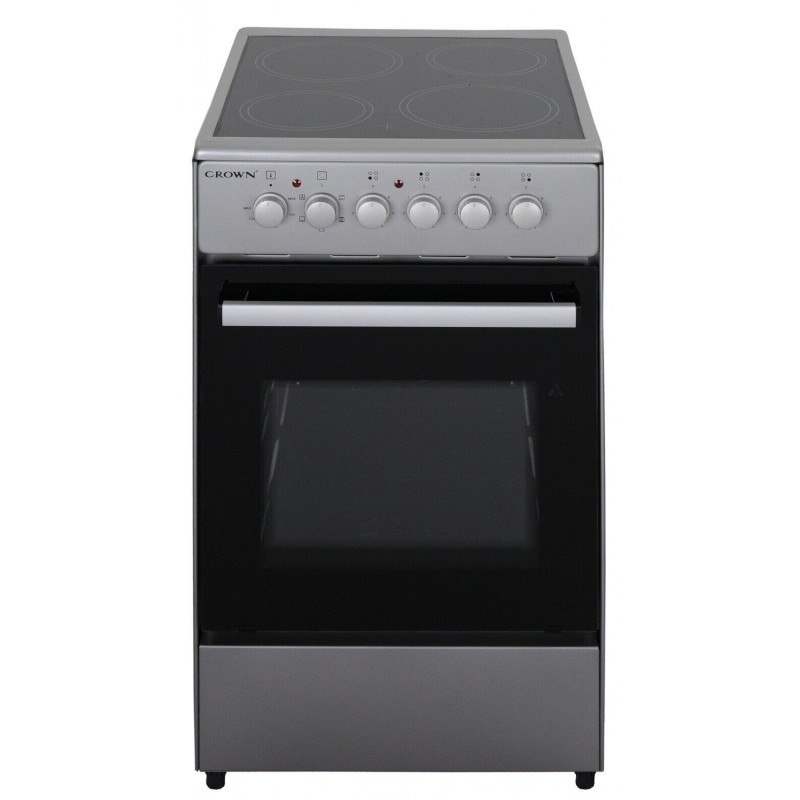
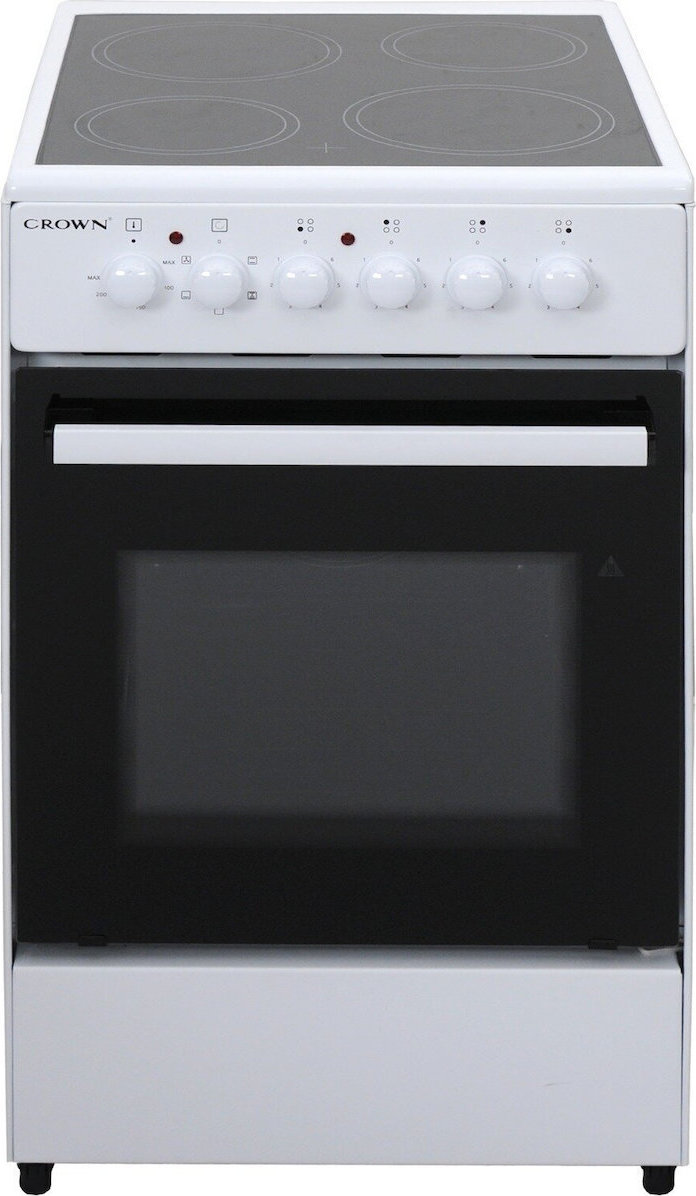
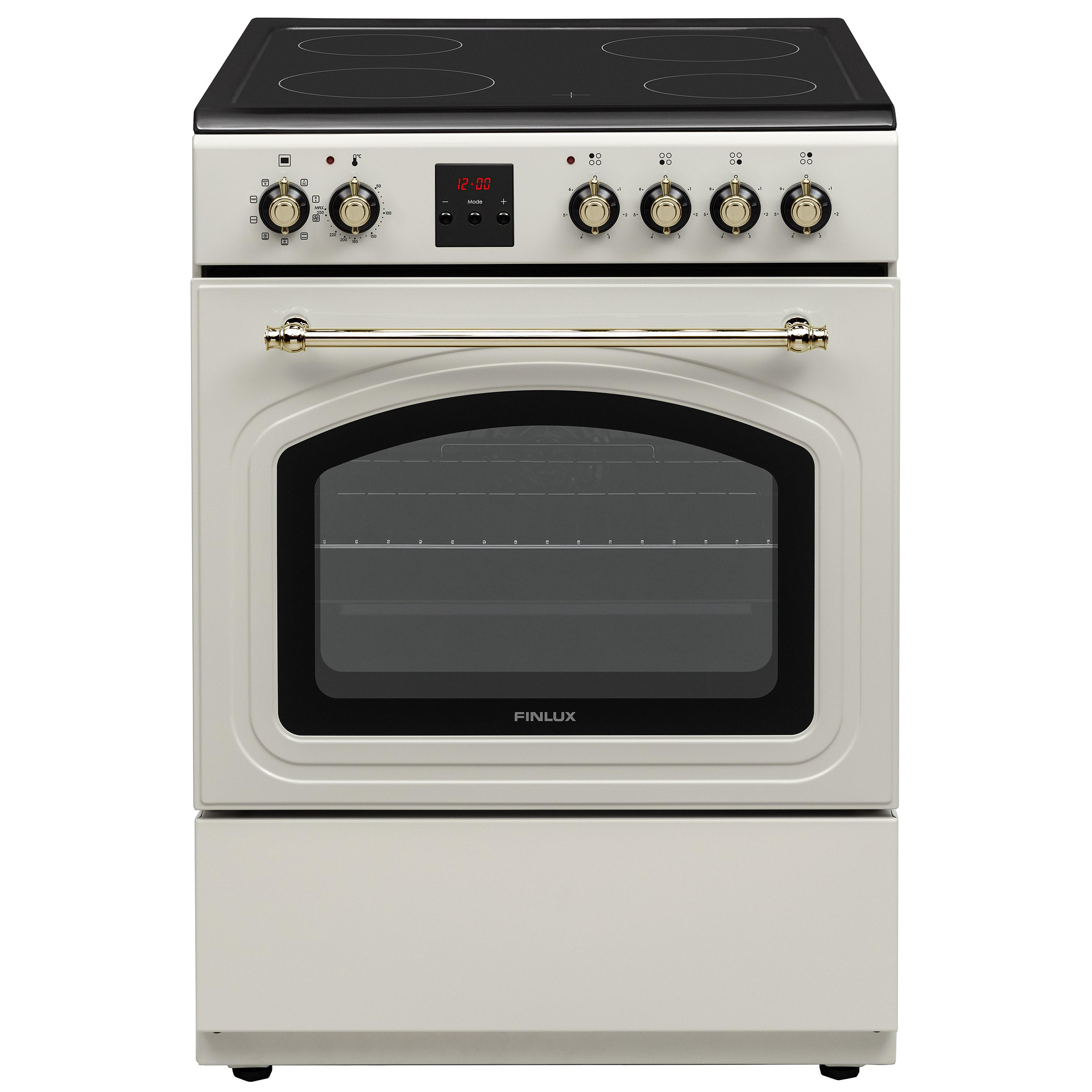
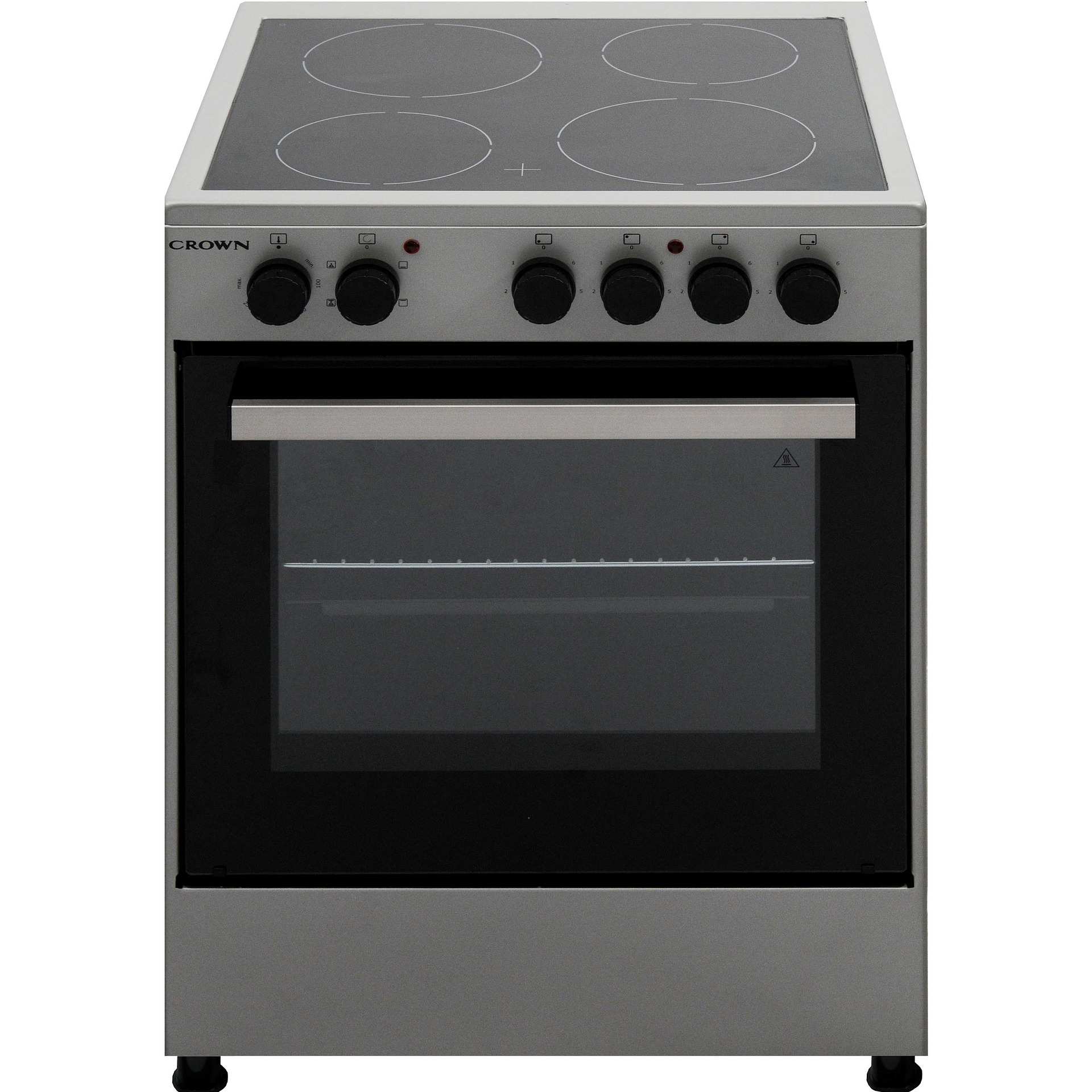
All four ceramic models have energy class A and a capacity of 47 to 69 litres.
Solid plate hobs: the budget option
A solid plate hob has a metal surface with an enamel finish. A solid plate cooker is a very economical option, but its drawback is time. It heats up considerably more slowly than ceramic, so it takes more patience, especially when you need to change the temperature quickly.
It is not the first choice for modern households, but it makes sense if you cook less often or only now and then, for example in a holiday home or a rental property.
Solid plate hob cookers from our store
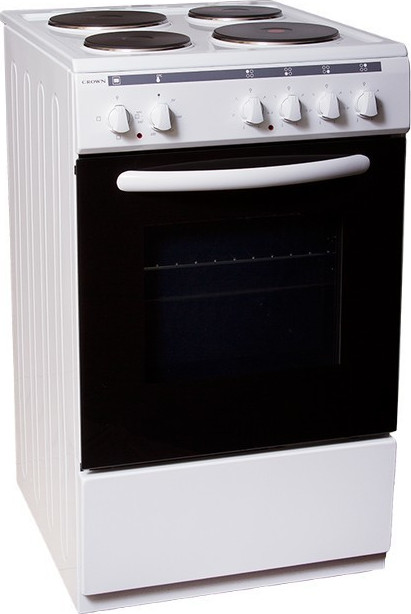
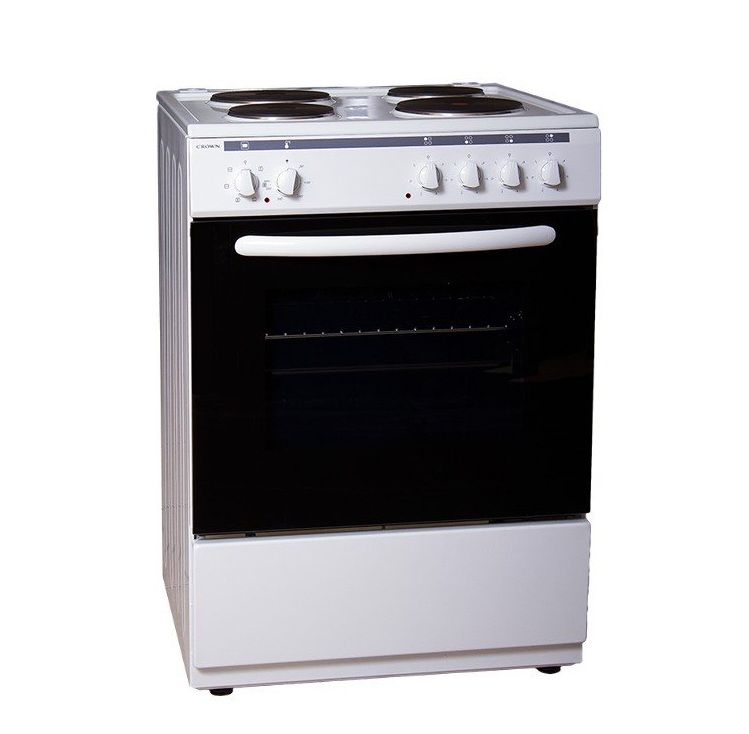
Both solid plate models have energy class A. One is 50 cm wide and the other is 60 cm, with capacities of 53 and 65 litres.
Ceramic or solid plate: the comparison
The table sets out the main differences, so you can see what you gain and what you give up with each type.
| Feature | Ceramic hob | Solid plate hob |
|---|---|---|
| Purchase price | Higher | Lower |
| Heating speed | Fast | Slow |
| Electricity use | Lower for the same cooking | Higher for the same cooking |
| Cleaning | Smooth surface, wipes clean easily | Wipe with a cloth, but the enamel can chip |
| Best for | Frequent cooking and a modern kitchen | Occasional use, small budget, holiday home |
Running cost on your bill
A solid plate hob costs less to buy, but it usually works out more expensive to run for the same meal. It takes longer to reach the temperature you need, and time on the hob is electricity.
To estimate the cost, multiply the power of the zone in kilowatts by the hours of use, then multiply that by the price of a kilowatt hour. The power rating is listed on the model's technical data sheet. In practice, the difference only shows if you cook often and for long periods.
50 or 60 cm: what fits your kitchen
The two main options are 50 cm and 60 cm wide. A 50 cm cooker suits small flats, holiday homes and rental properties, where space is limited. The 60 cm cooker is the usual size and normally has a bigger oven and a more comfortable cooking surface.
Of the models shown here, three are 50 cm wide and two are 60 cm wide. The name of the Crown CEC-6060V IX gives its width as 57 cm, so always check the dimensions on the model's data sheet. Before you buy, measure the width of your space between the units and the position of the power socket.
Do you need special pans?
A ceramic hob does not need pans with a magnetic base, as induction does. It does need a flat base, because only then does the heat spread evenly into the pan. Choose pans with a diameter equal to or slightly smaller than the zone. A small pan on a large zone wastes energy, and a pan with a warped base heats unevenly.
Lift pans rather than sliding them across the glass surface, so that it does not get scratched.
The downsides of ceramic hobs
Ceramic hobs have some drawbacks too, and they are worth knowing before you decide.
- Knocks: a heavy object can crack the glass surface.
- Sugar and plastic: melted sugar or plastic on the hot surface can damage it, so clean them up straight away.
- Scratches: rough pans leave marks.
- Cleaner: it needs a mild cleaner made for ceramic surfaces, so that it does not dull.
- Residual heat: the zone stays hot for a while after you switch off.
Which one to choose in the end
If you cook often and want fast heating and a clean surface, a ceramic hob is the better choice. If budget comes first or you cook rarely, a solid plate cooker does the job.
For size, choose 50 cm if space is limited and 60 cm if you have room to spare. Browse the full range in our category of freestanding electric cookers. If you are also kitting out the rest of your kitchen, read our guide to the no frost or static fridge freezer.
Frequently asked questions
Are solid plate hobs expensive to run?
They are one of the cheapest options to buy, but they take longer to heat up. So, for the same cooking, they usually use more electricity than ceramic.
What is the difference between a ceramic and a solid plate hob?
Ceramic has a smooth glass surface, heats up quickly and wipes clean easily, but it needs care with knocks. Solid plate has an enamel finish, costs less and heats up slowly.
Which is better, a solid plate hob or an induction hob?
Induction heats up faster and more efficiently, but it needs pans with a magnetic base and costs more. Solid plate is the most affordable and the slowest, so the choice depends on your budget and how much you cook.
Do ceramic hobs need special pans?
Not in the sense of a magnetic base. They do need a flat base and a diameter close to the size of the zone. Avoid pans with a warped base, because they heat unevenly and can scratch the glass surface.
What are the downsides of a ceramic hob?
A heavy knock can crack the surface, and melted sugar or plastic can damage it if you do not clean it up straight away. It also needs a mild cleaner.
Find the cooker that suits you
Ceramic and solid plate hobs, in 50 and 60 cm sizes, with delivery across Greece.
See the electric cookers