 GR
 EN

Heat pump or condenser tumble dryer
Heat Pump or Condenser Tumble Dryer: Which One to Choose
As winter arrives, a tumble dryer stops being a luxury and becomes a necessity. The first question is which type to buy: heat pump or condenser. In this guide you will see how each type works, how much electricity it uses, how quickly it dries and which one suits your home.
- A heat pump dryer uses much less electricity and dries at a lower temperature, which is gentler on clothes.
- A condenser dryer costs less to buy and dries faster, but uses more electricity in each cycle.
- If you use your dryer several times a week, a heat pump model usually pays back the price difference through lower electricity bills.
- Since July 2025, the new energy label runs from A to G, so many heat pump models now show a C, D or E rating.
- For a family of 3 to 4 people, an 8 or 9 kg dryer comfortably handles one full washing machine load.
Contents
How a condenser dryer works
A condenser dryer heats the air with an electric heating element and passes it through the drum with the clothes. The warm air picks up moisture, then cools in a heat exchanger, where the water vapour turns into water. The water collects in a tank that you empty, or it drains straight away through a hose.
Because the heating element works at a high temperature, the cycle finishes quickly. The downside is energy use: the heat it produces is lost in the heat exchanger and is not reused, so each cycle needs several kilowatt-hours.
How a heat pump dryer works
A heat pump dryer works on the same principle as an air conditioner. A refrigerant circuit warms the air that goes into the drum and cools the air that comes out, so the moisture turns into water. The heat is not thrown away but recycled again and again inside the appliance.
This means two things. First, electricity use drops significantly compared with a condenser dryer. Second, clothes dry at a lower temperature, which protects them from shrinking and wear. The cycle takes a little longer, which is normal for this technology.
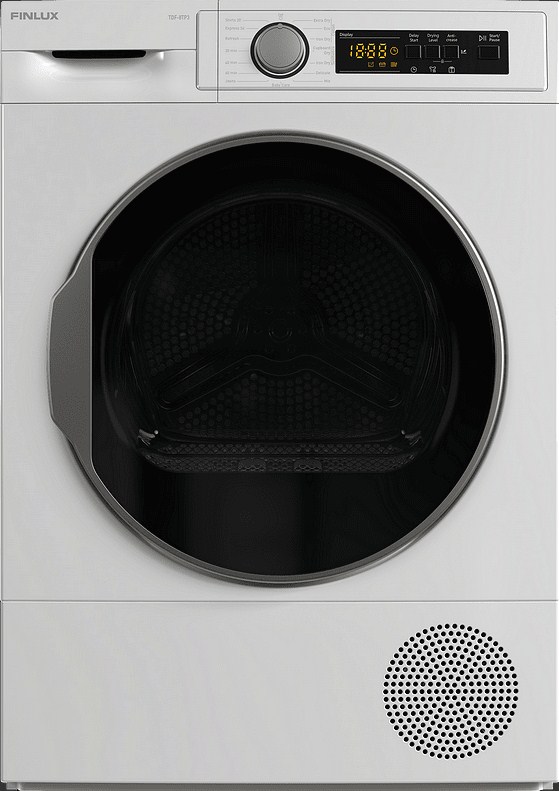
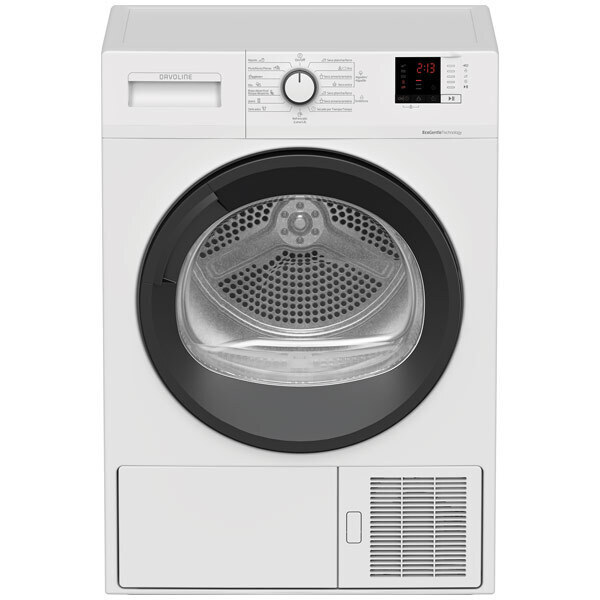
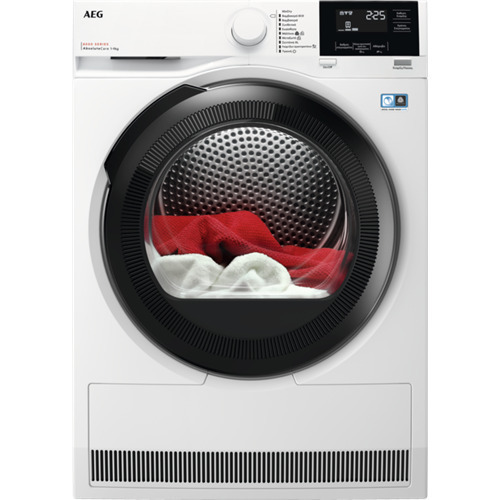
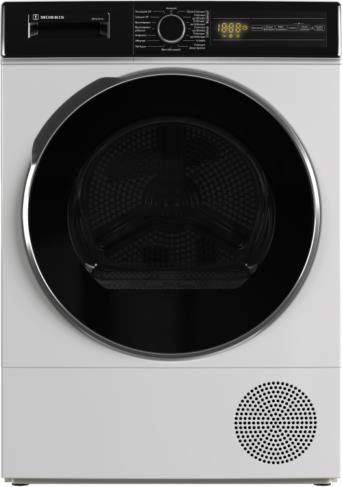
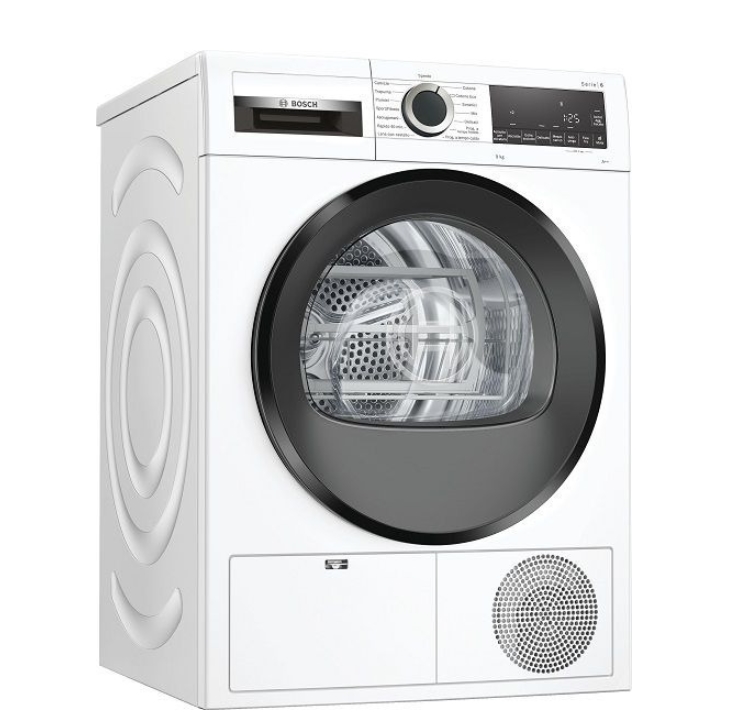
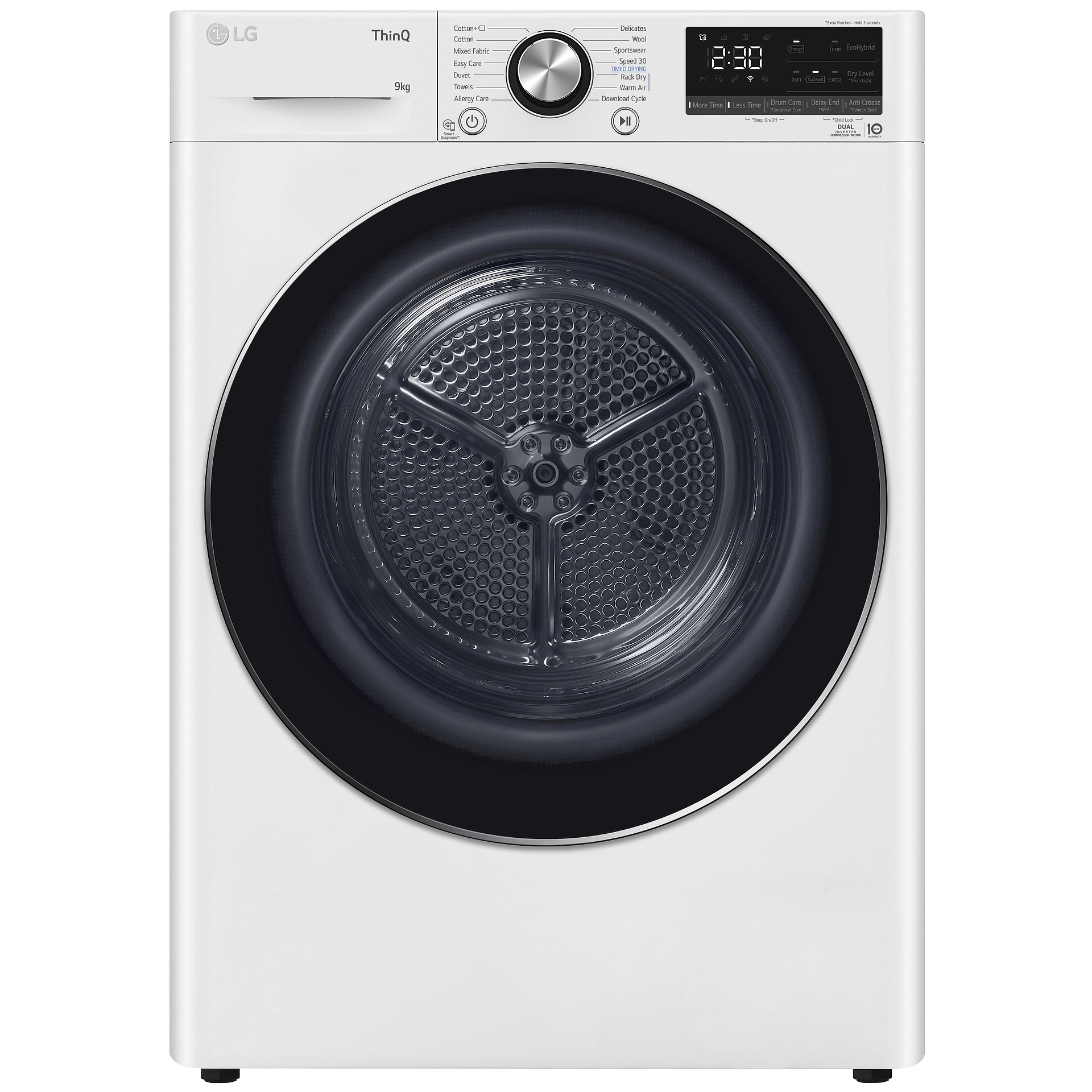
Heat pump dryers from our store
Heat pump or condenser: the comparison
The table below sums up the main differences, so you can see at a glance what you gain and what you give up with each type.
| Feature | Heat pump | Condenser |
|---|---|---|
| Electricity use | Low, as the heat is recycled | High, the heating element runs constantly |
| Drying temperature | Low, gentler on clothes | High |
| Cycle length | Longer | Shorter |
| Purchase price | Higher | Lower |
| Energy label | The best energy classes on the market | Lower energy classes |
| Heat and humidity in the room | Minimal | More heat around the appliance |
| Best for | Frequent use, families, delicate clothes | Occasional use, smaller budget |
Electricity use and the new energy label
Electricity use is the biggest difference between the two types. As a rough guide, an 8 kg condenser dryer needs a few kilowatt-hours for a full cycle, while a comparable heat pump model needs about half that, or even less. In a home that runs the dryer every other day, the difference shows clearly on the electricity bill over time.
Pay attention to the label. Since July 2025, tumble dryers carry a new energy scale from A to G, which is stricter than the old scale that went up to A+++. This is why heat pump dryers now show C, D or E, when on the old scale they would have been A++ or A+++. When you compare models, always compare classes on the same scale and check the annual energy use in kWh shown on the label.
How long drying takes
A condenser dryer usually finishes a full load more quickly, because it works at a higher temperature. A heat pump dryer takes longer with the same load, especially with heavy cottons and towels. If time is your first priority, look for models with quick programmes for small loads, which are handy for a shirt or a uniform you need right away.
Most modern dryers have a moisture sensor. The sensor stops the cycle once the clothes reach the desired dryness, so the appliance does not keep running for no reason and fabrics do not get 'baked'.
How much dryer capacity you need
The rule is simple: the dryer should hold at least as many kilograms as your washing machine washes, so that one full wash dries in a single cycle.
- 7 kg: for 1 to 2 people and small loads
- 8 kg: the most popular choice for 3 to 4 people
- 9 kg: for families who wash often
- 10 kg and up: for large families, duvets and blankets
If space is tight, there are also washer dryers, which do both jobs in one appliance.
Other things to check before buying
- Drainage: the option to connect to a drain, so you never have to empty the water tank
- Filters: easy access for cleaning after every cycle
- Noise: check the decibel rating on the label if it will be near a bedroom
- Stacking: a kit to fit the dryer on top of the washing machine and save space
- Programmes: woollens, synthetics, quick programme, anti-crease
- Connectivity: WiFi and an app to control it from your phone, on some models
Which one should you choose?
If you use a dryer often, or if you have children or clothes that need extra care, a heat pump model is the most sensible investment. It costs more to buy, but uses much less electricity and takes better care of fabrics.
If you only need it a few times in winter and want a lower purchase price, a condenser dryer meets your needs and dries faster.
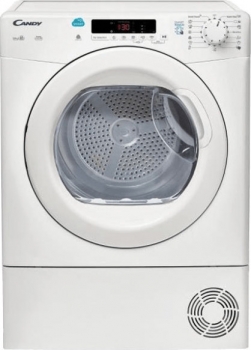
Condenser dryer from our store
See the full range in the tumble dryers category, with filters for kg capacity, brand and energy class.
Frequently asked questions
What are the disadvantages of a heat pump dryer?
It costs more to buy than a condenser dryer, and the drying cycle takes longer. It also needs regular filter cleaning to keep its performance up.
Which type of dryer is better?
For frequent use, a heat pump dryer is the better choice, because it uses much less electricity and dries more gently. For occasional use and a smaller budget, a condenser dryer is good enough.
Why are my clothes still damp after a heat pump dryer?
The usual causes are blocked filters, an overloaded drum or a programme that does not suit the fabric. Clean the filters, do not overfill the drum beyond its kg rating, and choose a programme with the right dryness level.
Why does a heat pump dryer take so long?
It runs at a lower temperature to save energy and protect your clothes, so the cycle is naturally longer. If it takes longer than it used to, check the filters and the heat exchanger.
How much electricity does a heat pump dryer use?
It uses about half as much energy as a comparable condenser dryer, or even less. You can find the exact annual consumption in kWh on the energy label of each model.
What is a heat pump dryer?
It is a dryer that heats and cools the air using a refrigerant circuit, like an air conditioner, and recycles the heat. This way it dries clothes at a low temperature, using much less energy.
What is the difference between a heat pump dryer and a vented dryer?
A vented dryer sends damp air outside through a pipe and uses a lot of electricity. A heat pump dryer does not need an outside pipe, collects the moisture as water and is far more economical.
Find the dryer that suits you
Dozens of heat pump models from 8 to 10 kg, with delivery across Greece.
See the dryers