 GR
 EN

How to choose a washing machine
How to Choose a Washing Machine: Kg, Spin Speed and Energy
The washing machine is one of the appliances that works hardest in a home, so getting the right one makes a difference every week. This guide covers what counts, in order: capacity, spin speed, energy rating, motor, noise and programmes.
- For a family of 3 to 4 people, 8 or 9 kg is the most practical capacity.
- 1400 rpm wrings clothes out better and shortens drying time, while 1200 rpm easily covers everyday use.
- Since 2021, the energy label on washing machines runs from A to G, so an A-rated machine is one of the most energy-efficient on the market.
- An inverter motor is quieter and more reliable over time.
- Always check the space available, especially the depth, before you buy.
Contents
How many kg washing machine do you need?
Capacity shows how many kg of dry laundry the drum holds on a cotton programme. A bigger washing machine does not necessarily use more energy, because you wash more clothes in fewer cycles. A very small machine, though, will mean running two washes instead of one.
- 6 to 7 kg: for 1 to 2 people
- 8 kg: for 3 to 4 people, the most popular choice
- 9 kg: for families with children and frequent washes
- 10 kg and up: for large families, duvets and blankets
7 and 8 kg washing machines from our shop

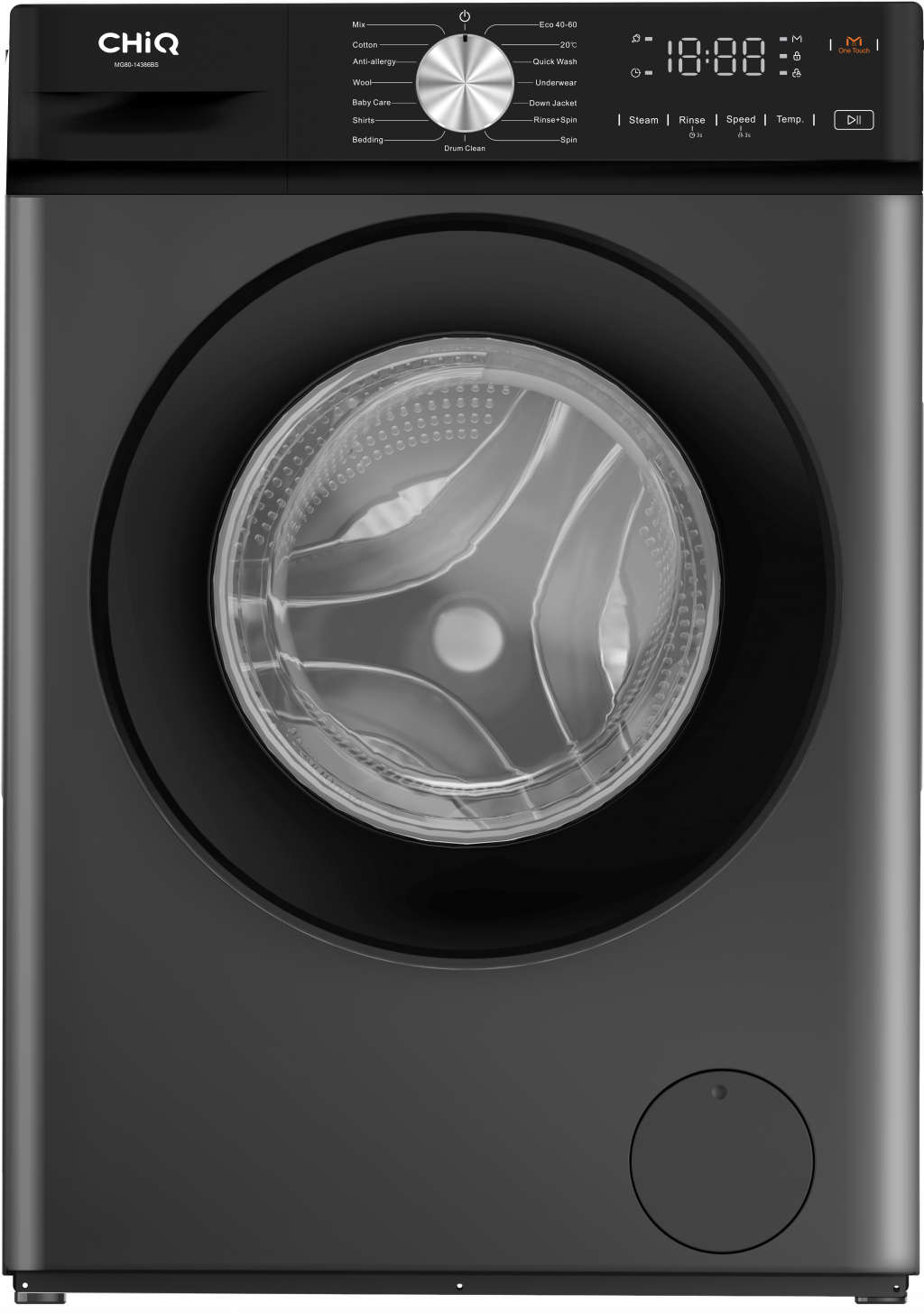

Spin speed: 1000, 1200 or 1400
Spin speed, measured in revolutions per minute (rpm), shows how fast the drum turns during the spin cycle. The higher the spin speed, the less water stays in the clothes and the faster they dry on the airer or in a tumble dryer.
For everyday use, 1200 rpm is enough. 1400 rpm is worth it if you have a tumble dryer or hang clothes to dry indoors in winter, because the clothes come out drier. All washing machines let you lower the spin speed for delicate fabrics, so a higher spin speed is an option, not a must. If you are also considering a tumble dryer, read our guide to heat pump or condenser tumble dryers.
Energy rating and energy use
Since March 2021, washing machines have had a new energy label, graded from A to G. The old scale with A+++ no longer applies to washing machines, so an A-rated machine with the new label is one of the most efficient on the market. The label also shows energy and water use per 100 cycles, the length of the eco programme and the noise level during spin.
Most of the energy goes on heating the water. Washing at 30 or 40 degrees and using the eco programme keep bills down, even if the eco programme runs for longer.
| Feature | What it means | What to look for |
|---|---|---|
| Capacity | Kg of dry laundry per wash | 8 or 9 kg for a family |
| Spin speed | How well it wrings out clothes | 1200 rpm for everyday use, 1400 rpm for drier clothes |
| Energy rating | Electricity use, scale A to G | A or B for lower bills |
| Motor | Inverter or standard | Inverter for less noise |
| Noise | Decibels during spin | Lower dB if it will be close to living areas |
| Steam | Steam programme | Fewer creases and fresher clothes |
Inverter motor and noise
Washing machines with an inverter motor, often also called BLDC, have no brushes that wear out. This makes them quieter, especially on spin, and more durable over time. If the machine is going in the kitchen or close to a bedroom, check the spin decibels (dB) on the energy label.
Programmes and extras worth having
- Steam: fewer creases and fresher clothes
- Quick programme: for a few lightly soiled items
- Woollens and delicates: low temperature and gentle spin
- Delay start: so it finishes when you get home
- Automatic load sensing: adjusts water and time to the load
- WiFi: control and alerts from your phone
9 and 10 kg washing machines from our shop


Dimensions and placement
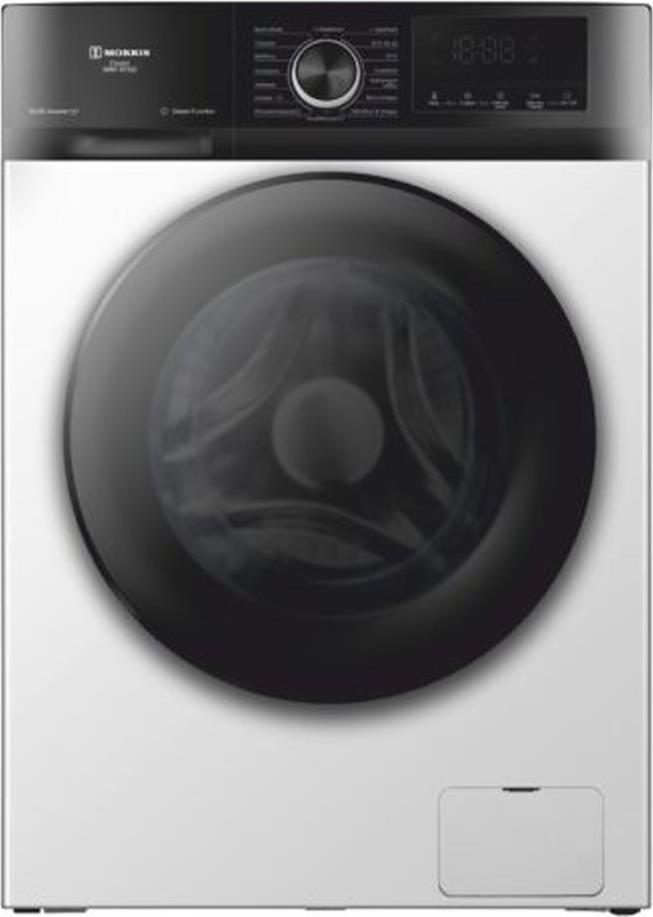
Most freestanding washing machines are 60 centimetres wide and around 85 centimetres high. Where they differ is in depth, which increases as the capacity goes up. Measure the space and leave a few centimetres behind the machine for the hoses and the power socket. If you want the machine hidden inside a kitchen cupboard, built-in models are available too. If there is not enough room for two appliances, washer dryers wash and dry in the same unit.
Which one to choose
Start with the capacity your family needs and the size of the space. Then choose the spin speed depending on whether you have a tumble dryer, and go for a high energy rating and an inverter motor for lower bills and a quieter home. Extras such as steam and WiFi are just the cherry on top.
Browse all our washing machines, with filters for kg, spin speed and brand.
Frequently asked questions
How do I decide which washing machine to buy?
Start with the capacity your family needs and the space you have. Then compare energy rating, spin speed, motor and noise, and finally the programmes and extras.
Is 1200 rpm enough for a washing machine?
Yes, for most families 1200 rpm is enough. 1400 rpm leaves clothes drier and is worth it if you have a tumble dryer or hang clothes to dry indoors.
What is the best spin speed for a washing machine?
For everyday use, 1200 to 1400 rpm is the best balance. For delicates and synthetics, choose a lower spin speed than the programme's default.
Do high spin speeds damage clothes?
High spin speeds may crease some fabrics more, but programmes for delicates, woollens and synthetics automatically reduce the spin speed. With cottons and towels, high spin speeds are not a problem.
Why do clothes come out very wet after the spin?
This is usually caused by an unbalanced load, too few items or items that are too heavy, or a blocked pump filter that stops the water from draining. Clean the filter and check that the programme is not set to a low spin speed or has the spin cancelled.
How do I find a quiet washing machine?
Check the spin decibels on the energy label and choose a model with an inverter motor. Levelling the machine properly with its adjustable feet also reduces vibration.
What types of washing machine are there?
There are front-loading machines, top-loading machines, built-in models and washer dryers that do both jobs. In Greece, the most common are freestanding front loaders that are 60 centimetres wide.
Find the washing machine that suits you
Over 100 models from 6 to 20 kg, with delivery across Greece.
See our washing machines