 GR
 EN

Oil radiator, convector or quartz heater
Oil Radiator, Convector or Quartz Heater: Which to Choose
When the temperature drops, an electric heater is the easiest way to warm a room with no installation needed. The three most common types are the oil radiator, the convector heater and the quartz heater. They work in different ways and suit different needs, so it is worth knowing what you are buying.
- The oil radiator heats slowly but steadily, holds its warmth and is silent, making it ideal for bedrooms and long periods of use.
- The convector heater warms the room more quickly, is lightweight and many models can also be wall-mounted.
- The quartz heater gives instant heat wherever you point it, making it suitable for quick warmth in one spot or in a bathroom with the right protection.
- All electric heaters with a heating element turn electricity into heat in a similar way. The running cost depends mainly on the wattage and the hours of use.
- The thermostat and the right power for the size of the room are what keep your bill low.
Contents
How the oil radiator works
The oil radiator has a special thermal oil inside it, which is heated by an electric heating element. The oil warms the body's fins, and these warm the air in the room. Because the oil holds its heat, the radiator keeps warming for quite a while even after the thermostat switches off the heating element.
The result is gentle, even warmth with no noise and without drying out the air too much. The downside is that it takes time to warm up the room and that it is heavy, which is why most models have castors.
How the convector heater works
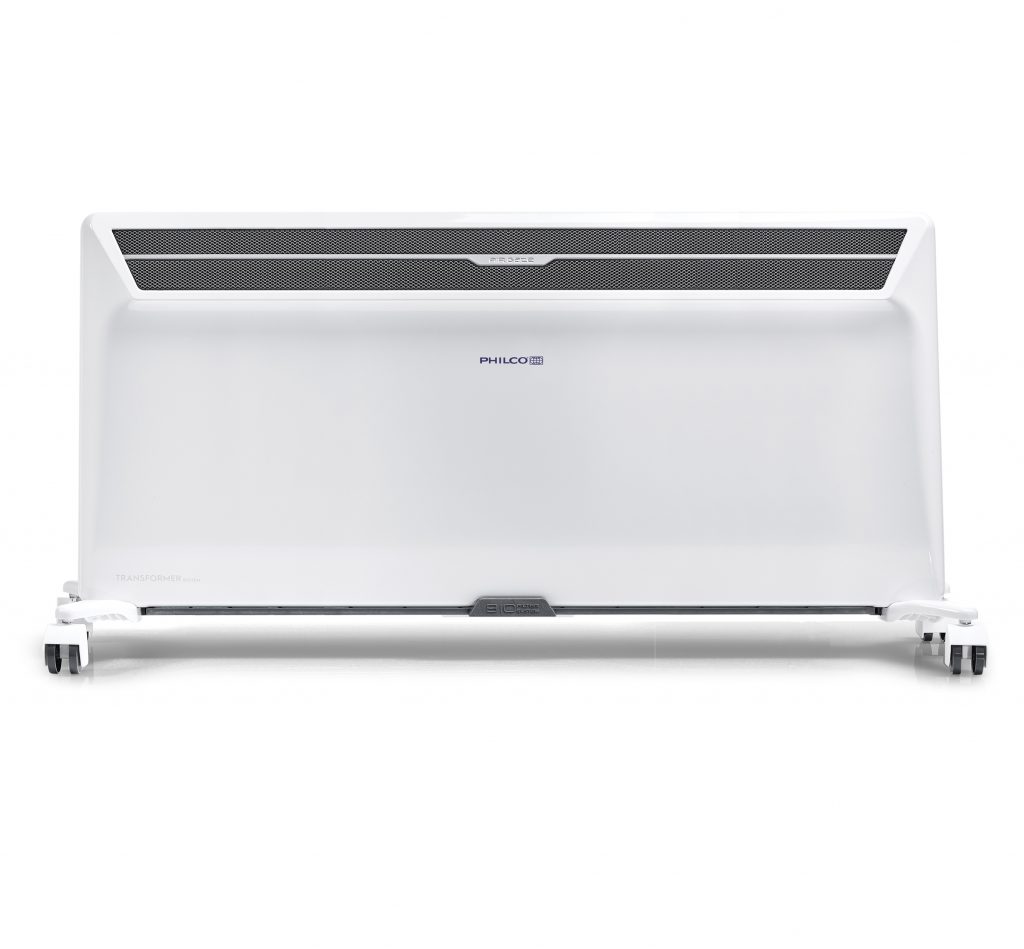
The convector heater warms the air that passes through its heating element. Cold air enters at the bottom, is warmed and leaves through the top, creating a natural flow that circulates the warmth around the room. This means the space warms up faster than with an oil radiator.
Convector heaters are slim and lightweight, and they stand on the floor on small feet or hang on the wall. Inverter models adjust their power to the temperature you want, so they do not keep switching on and off at full power. Once the thermostat switches off, a convector heater cools down faster than an oil radiator.
Oil radiators and convector heaters from our store


How the quartz heater works
The quartz heater warms by radiant heat. Its quartz lamps heat up within seconds and warm whatever is directly in front of them, people and objects, rather than the air across the whole room. That is why you feel warmth as soon as you switch it on.
It is ideal for quick warmth in one specific spot, such as in front of the sofa, at your desk or in the bathroom in the morning. For the bathroom you need a model suitable for damp areas, usually a wall-mounted one with an IP rating. It is not the best choice for evenly heating a large room for long periods.
Quartz heaters from our store


The comparison at a glance
| Feature | Oil radiator | Convector heater | Quartz heater |
|---|---|---|---|
| How it heats | Warms the air gently | Circulates warm air | Radiant heat to one spot |
| Speed | Slow | Fast | Instant |
| Holds heat | Yes, for quite a while | A little | No |
| Noise | Silent | Quiet, unless it has a fan | Silent |
| Weight and placement | Heavy, on castors | Lightweight, floor or wall-mounted | Lightweight, floor or wall-mounted |
| Best for | Bedrooms, long periods of use | Living rooms, warming a room quickly | Bathrooms, offices, spot heating |
How much electricity a heater uses
An electric heater with a heating element converts almost all of its electricity into heat, whether it is an oil radiator, a convector heater or a quartz heater. So its running cost depends on two things: the power in watts and the number of hours it runs at full power.
The maths is simple. A 2000W heater that runs for one hour at full power uses 2 kilowatt hours (kWh). Multiply that by your supplier's price per kWh and you have the cost of that hour. In practice, with the thermostat set correctly, the heating element does not run continuously, so the actual consumption is lower.
How powerful a heater you need
The power should match the size of the room. A small heater in a large space will run continuously without warming the room properly, while a very large one in a small space will keep switching on and off. As a rough guide, for average insulation:
- Up to 10 m²: about 1000W, for a bathroom or small room
- 10 to 15 m²: about 1500W, for a bedroom
- 15 to 20 m²: about 2000W, for a large room
- Over 20 m²: 2500W, or two heaters in separate areas
In a home with poor insulation or high ceilings, go for the next size up.
Using it safely
- Never cover the heater or drape clothes over it
- Keep it away from curtains, furniture and paper
- Plug it directly into the wall socket, not into an extension lead with other appliances
- Choose models with overheating and tip-over protection
- In the bathroom, only use models suitable for damp areas
- Make sure it stands firmly and keep it away from where children play
Which one to choose
For the bedroom, or for hours of continuous use, the oil radiator is the most comfortable choice, as it is silent and gives steady warmth. For the living room, or when you want the room warm quickly, a convector heater, ideally an inverter model, does the job best. For the bathroom, or for quick warmth in one spot, a quartz heater is the most practical solution.
See the full range of heaters and convector heaters, or browse the whole air conditioning and heating category.
Frequently asked questions
Which is cheaper to run, an oil radiator or a convector heater?
At the same power and for the same hours of use, they use roughly the same amount of electricity, because both turn electricity into heat using a heating element. The oil radiator holds its heat for longer after the thermostat switches off, while an inverter convector heater adjusts its power and can cost less to run.
What are the downsides of an oil radiator?
It warms a cold room slowly, it is heavy and it takes up space. Its surface also gets quite hot, so you need to be careful around small children.
Which is better, a convector heater or an oil radiator?
It depends on how you use it. A convector heater is better for quick warmth and for wall mounting, while an oil radiator is better for long, quiet and steady warmth in bedrooms.
Does an oil radiator use a lot of electricity?
It uses as much as its power rating shows when the heating element is running, for example 2 kWh per hour for a 2000W radiator at full power. With the thermostat set and the room kept closed up, the actual consumption is lower because the heating element switches on and off.
Which is the cheapest electric heater to run?
Among heaters with a heating element there is not much difference in efficiency, so the cost depends on the wattage, the thermostat and the hours of use. A more economical way to heat with electricity is an inverter air conditioner, because it works as a heat pump.
Is it cheaper to leave the oil radiator on all the time?
No, the longer it runs, the more it uses. Switch it on shortly before you need the room, and let the thermostat hold the temperature while you are using it.
Does an oil radiator need maintenance?
Not really. The oil is sealed inside the body and never needs topping up. All you need to do is clean the dust off the fins with it unplugged and check that the cable is in good condition.
Warm up your home this winter
Oil radiators, convector heaters and quartz heaters, with delivery across Greece.
See the heaters